The Europe Pumps Market Is at a Turning Point Between Regulatory Change and the Energy Transition
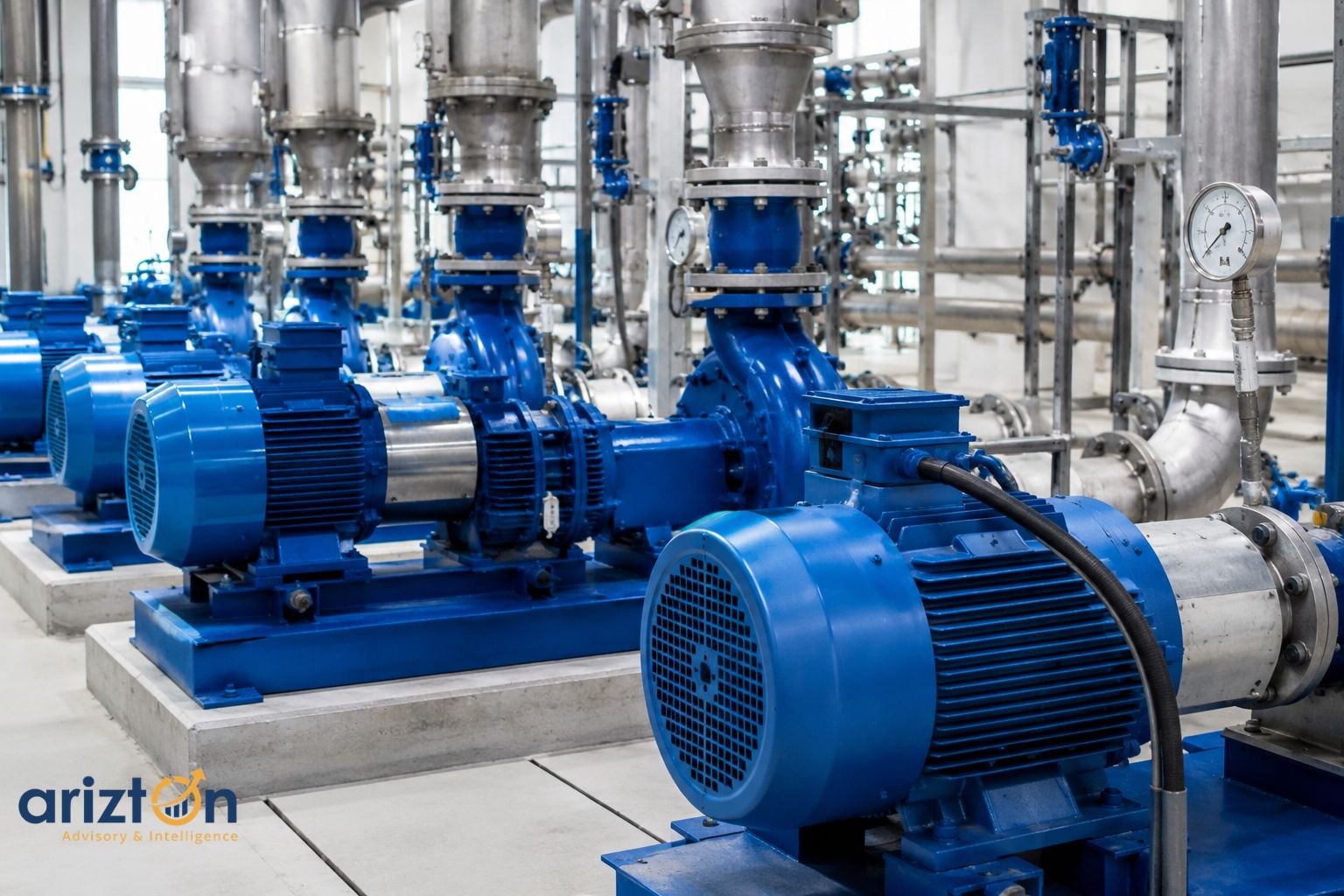
The Europe pumps market is no longer moving on traditional replacement cycles alone. Regulatory mandates, the EU energy transition, aging water infrastructure, and rapid digitalization are converging to reshape demand across every pump category — from the centrifugal pump market to the rotary pumps market to commercial pumps used in municipal and building services applications. The shift is structural, and its pace is accelerating.
Valued at USD 17.50 billion in 2025, the Europe pumps market is projected to reach USD 22.53 billion by 2031, expanding at a CAGR of 4.30% over the forecast period.
Market Size and Momentum in the Europe Pumps Market
The scale of the Europe pumps market reflects the breadth of its end-user base. Industrial facilities, water utilities, oil and gas operators, food and beverage manufacturers, and commercial building operators all depend on pumps as critical infrastructure — not optional equipment. This embedded demand profile creates a resilient growth floor, even as macroeconomic conditions fluctuate.
The electrical operation segment accounts for approximately 62% of total market share, driven by the widespread integration of IE3–IE5 motors and variable frequency drives across industrial and commercial installations. The industrial sector is the largest end-user overall, with the oil and gas industry commanding the largest share among specific industry verticals.
Post-pandemic backlog execution provided a strong growth catalyst in 2023, but the drivers sustaining momentum through 2031 — EU regulatory compliance deadlines, energy transition infrastructure build-out, and large-scale water network modernization — are structural, not cyclical.
Explore the full Europe Pump Market
Horizontal Pumping Systems Market and Rotary Pumps Market Compete on Efficiency and Application Fit
The horizontal pumping systems market in Europe operates primarily within the centrifugal and reciprocating categories, serving process industries where consistent, high-volume fluid transfer at defined pressure ranges is critical. These configurations dominate pipeline applications, water distribution networks, and industrial process loops across Germany, France, and the UK.
In the rotary pumps market, gear pumps lead with the largest share in 2025. Their simple, durable design makes them the preferred choice in automotive lubrication systems, hydraulic power units, industrial machinery, and fuel transfer operations — applications that are concentrated in Europe's strongest manufacturing economies. Gear pumps move fluid between intermeshing gears, making them highly effective for viscous liquids and applications requiring consistent flow rates under varying loads.
The reciprocating pump segment presents a distinct value proposition alongside the rotary pumps market:
- Piston pumps lead the reciprocating category, valued for high-pressure output in hydraulic fracturing, industrial high-pressure cleaning, chemical dosing, and automotive manufacturing processes.
- Diaphragm pumps rank second, offering leak-free handling of corrosive, abrasive, and viscous fluids — a critical requirement in pharmaceutical manufacturing, food processing, and wastewater treatment where hygiene and contamination control are non-negotiable.
Key Insight: Both the rotary pumps market and the horizontal pumping systems market face the same pressure: EU eco-design directives are raising the efficiency floor, and manufacturers who do not invest in motor efficiency and intelligent control integration risk regulatory-driven obsolescence before 2031.
Commercial Pumps Market Expands as Urban Infrastructure Investment Accelerates
The commercial pumps market in Europe is growing at the intersection of rapid urbanization, EU Urban Wastewater Treatment compliance obligations, and increasing investment in district heating systems and stormwater infrastructure. As cities expand, municipalities are scaling spending on water supply networks, wastewater treatment plants, and building services systems that require reliable, energy-efficient pumping equipment.
Single-stage circulator and booster pumps — the workhorses of the commercial building sector — are seeing sustained demand across domestic hot water circulation, chilled water networks, pressure boosting, and central heating applications. Smart pump systems with integrated sensors and monitoring capabilities are increasingly specified in new commercial construction and large-scale retrofit projects.
- The EU Water Resilience Strategy is directing significant capital toward aging water infrastructure — creating a multi-year demand stimulus for pump OEMs and systems integrators with commercial and municipal market exposure.
- EU Urban Wastewater Treatment compliance deadlines are compelling municipalities to invest in high-performance pump systems capable of meeting stricter effluent and operational standards.
Key Insight: The commercial pumps market is not simply benefiting from construction activity — it is being structurally upgraded by regulatory compliance timelines that are not discretionary, and that compress both specification cycles and procurement lead times.
Germany Pumps Market Sets the Regional Benchmark for Industrial Pump Demand
The Germany pumps market is the largest in Europe, accounting for approximately 17% of total regional demand in 2025. The country's industrial depth — spanning chemicals, automotive manufacturing, machinery production, and power generation — creates sustained, diversified demand across virtually every pump category, from single-stage centrifugal to gear to piston.
Germany's ongoing energy transition and industrial modernization programs are simultaneously driving demand in two directions: replacing legacy fossil fuel infrastructure while building out district heating systems, hydrogen-ready process lines, and energy-efficient water networks. This dual dynamic means the Germany pumps market is not contracting in any segment — it is reorienting.
- Germany's chemical and manufacturing sectors remain the primary demand engine for rotary gear pumps and reciprocating piston pumps used in lubrication systems, hydraulic power units, and industrial processing equipment.
- District heating expansion and building energy retrofit programs are fueling demand for high-efficiency circulators and smart pump systems in the commercial and residential building segments.
Beyond Germany, the UK is one of the fastest-growing pump markets in the region, driven by water utility investment programs targeting network efficiency and loss reduction. The Nordic region — Denmark, Sweden, Norway, Finland — leads in digitally connected and energy-efficient pump system adoption, supported by strong environmental policies and widespread district heating networks. Denmark's extensive district heating infrastructure is a particularly strong demand driver for large circulation pumps and advanced pumping solutions.
Strategic Takeaway: A Market Defined by Structural Investment, Not Cyclical Replacement
The Europe pumps market is shifting from replacement-cycle demand to structurally driven growth, with increasing value concentrating in energy-efficient, digitally connected, and compliance-ready pump systems. Across the centrifugal pump market, the rotary pumps market, the horizontal pumping systems market, and the commercial pumps market, the same dynamic is playing out: buyers are moving away from commodity-grade equipment toward certified, intelligent, and system-integrated solutions.
The Germany pumps market will continue to anchor regional demand, but the fastest-growing opportunities are emerging in smart pump adoption, VFD integration, municipal water infrastructure, and the district heating expansion underway across Northern and Central Europe. For pump manufacturers and distributors with the technical depth to compete on performance — not just price — the trajectory through 2031 is compelling.
Raw material volatility and cross-border regulatory complexity remain real constraints, but they are raising barriers to entry more than they are suppressing demand. The market is selecting for manufacturers with compliance alignment, system integration capability, and material innovation — not scale alone.